
Schools
Cleveland Guardians pitchers Emmanuel Clase and Luis Ortiz called ‘cheaters’ at fraud trial
By Lucas Grant
Advertisement · Why this ad?
A former educator, Lucas holds a degree in Education from Nazareth College and has transitioned to journalism, focusing on education reporting for the Rochester Beacon. He aims to shed light on both the challenges and triumphs within local schools.
More from Lucas →
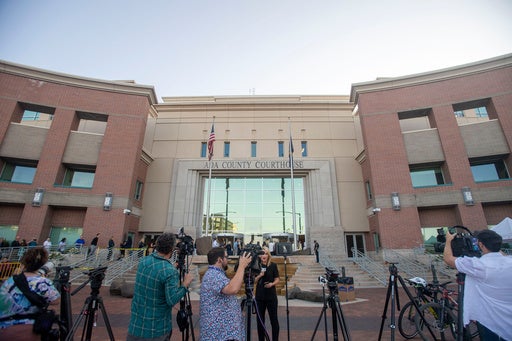
As the sun dipped below the skyline of Brooklyn, the atmosphere in the federal courthouse was thick with tension. A crowd of spectators gathered outside, their conversations buzzing with disbelief and intrigue. Among them was a group of baseball enthusiasts, clutching Guardians memorabilia, their faces a mixture of hope and disappointment. Inside, the trial of Cleveland Guardians pitchers Emmanuel Clase and Luis Ortiz was set to unfold, a case that could shake the very foundation of America’s beloved pastime.
On November 2, 2026, the courtroom echoed with the words of Assistant U.S. Attorney Rebecca Urquiola, who wasted no time in labeling Clase and Ortiz as “cheaters.” The prosecution outlined a troubling narrative: Clase, who had built a reputation as a formidable closer, allegedly befriended a gambler named Enoc Pena in the Dominican Republic. This relationship, according to Urquiola, spiraled into a scheme where Clase shared insider information about his pitches, allowing gamblers to profit significantly—reportedly over $460,000—by betting on whether his pitches would be balls or strikes.
Clase, 28, a three-time All-Star and two-time American League Reliever of the Year, was at the peak of his career, having recently completed a $20 million, five-year contract. Ortiz, 27, a promising starter, earned $782,600 during the 2025 season. The stakes were high, and the implications of the charges were dire. Both players faced conspiracy charges that could tarnish their careers and reputations forever.
The prosecution's case hinges on several pieces of evidence, including text messages where the players allegedly used code words like “chicken” and “rooster” to discuss rigged pitches. As the trial progresses, the jury will have to sift through the complexities of these communications to determine the truth behind the allegations.
In stark contrast to the prosecution's claims, the defense team painted a different picture of Clase and Ortiz. Michael Bronson, representing Clase, argued that his client was a victim of Pena's deceit. He described Clase's humble beginnings in a small coastal village in the Dominican Republic, where he attended school until age 15 before dedicating himself to baseball. Bronson emphasized that Clase had worked tirelessly to achieve his dreams and would never jeopardize his career for a few thousand dollars.
According to Bronson, Pena was not a friend but rather a manipulative figure who took advantage of Clase's trust. He recounted how Pena ingratiated himself into Clase's life by bringing him food and offering rides, all while claiming to have insider information that he was actually fabricating. This narrative of betrayal struck a chord, as it highlighted the vulnerability of athletes in a world rife with temptation and deceit.
Samuel Landes, representing Ortiz, echoed Bronson's sentiments, asserting that Ortiz had no direct contact with gamblers and was merely a victim of circumstance. He emphasized that the only pitches at stake in this trial were two balls, which he argued did not constitute a conspiracy. Landes urged the jury to consider the implications of the charges and the character of his client, who stood to lose millions in future contracts.
Central to the trial is the figure of Enoc Pena, the gambler whose friendship with Clase allegedly sparked the conspiracy. As the defense pointed out, Pena had a questionable history, having made over 7,000 bets between 2023 and 2025 and reportedly lying to obtain what he wanted. The defense contended that Pena was trying to sell fabricated information to other gamblers, claiming insider knowledge that he did not possess.
Bronson argued that Pena's actions were motivated by self-interest, highlighting the irony that the real “cheater” in this scenario might not be Clase or Ortiz, but rather the man who sought to profit from their reputations. The defense's strategy is to dismantle Pena's credibility and expose the flaws in the prosecution's narrative.
The trial has reverberated beyond the courtroom, igniting discussions among fans, players, and sports analysts alike. For many in the Rochester community, the Guardians represent more than just a baseball team; they symbolize hope, perseverance, and the American dream. The idea that two of their star players could be involved in such a scandal has left many grappling with feelings of betrayal.
Local sports bars that typically buzz with excitement during game nights have become platforms for heated debates. Fans express their disbelief, some defending Clase and Ortiz while others feel disillusioned by the potential betrayal of their heroes. It’s a reminder of the fragile relationship between athletes and the communities that support them, where loyalty can quickly turn to skepticism.
Families that gather to watch games have found themselves discussing the implications of the trial at the dinner table, reflecting on the values of honesty and integrity. In a world where sports often serve as a moral compass, the unfolding drama has forced many to reconsider what it means to be a role model.
This trial is not just about two players; it’s a reflection of a larger issue within professional sports. The intersection of gambling and athletics poses significant ethical challenges, raising questions about the integrity of the game. As gambling becomes more accessible and mainstream, the potential for corruption increases, threatening the very essence of sportsmanship.
Urquiola’s statements during the trial underscore the seriousness of the charges, as she emphasized the need to protect the integrity of the sport. The case serves as a cautionary tale for athletes, reminding them of the importance of surrounding themselves with trustworthy individuals and maintaining a commitment to ethical behavior.
The outcome of this trial could set a precedent for how similar cases are handled in the future, impacting not only the players involved but also the broader landscape of professional sports. As the lines between entertainment and ethics blur, the stakes have never been higher for athletes striving to uphold their reputations.
As the trial continues, the eyes of the sports world remain fixed on Brooklyn. Both Clase and Ortiz maintain their innocence, and their legal teams are poised to present a robust defense. The community of Rochester, along with Guardians fans everywhere, will be watching closely, hoping for a resolution that restores faith in their players.
The trial’s outcome will undoubtedly influence the careers of Clase and Ortiz, but it also serves as a reminder of the challenges faced by athletes in a rapidly changing landscape. As they navigate the complexities of fame, wealth, and integrity, the hope is that they will emerge from this ordeal stronger and more committed to their values.
In the meantime, the Guardians organization has remained silent, leaving fans to wonder what the future holds for their beloved team. As the trial progresses, one thing is clear: the love for the game and the commitment to integrity must prevail, ensuring that the spirit of baseball remains untainted for generations to come.
By Lucas Grant

By Nina Rodriguez

By Marcus Chen
By Julia Patterson